
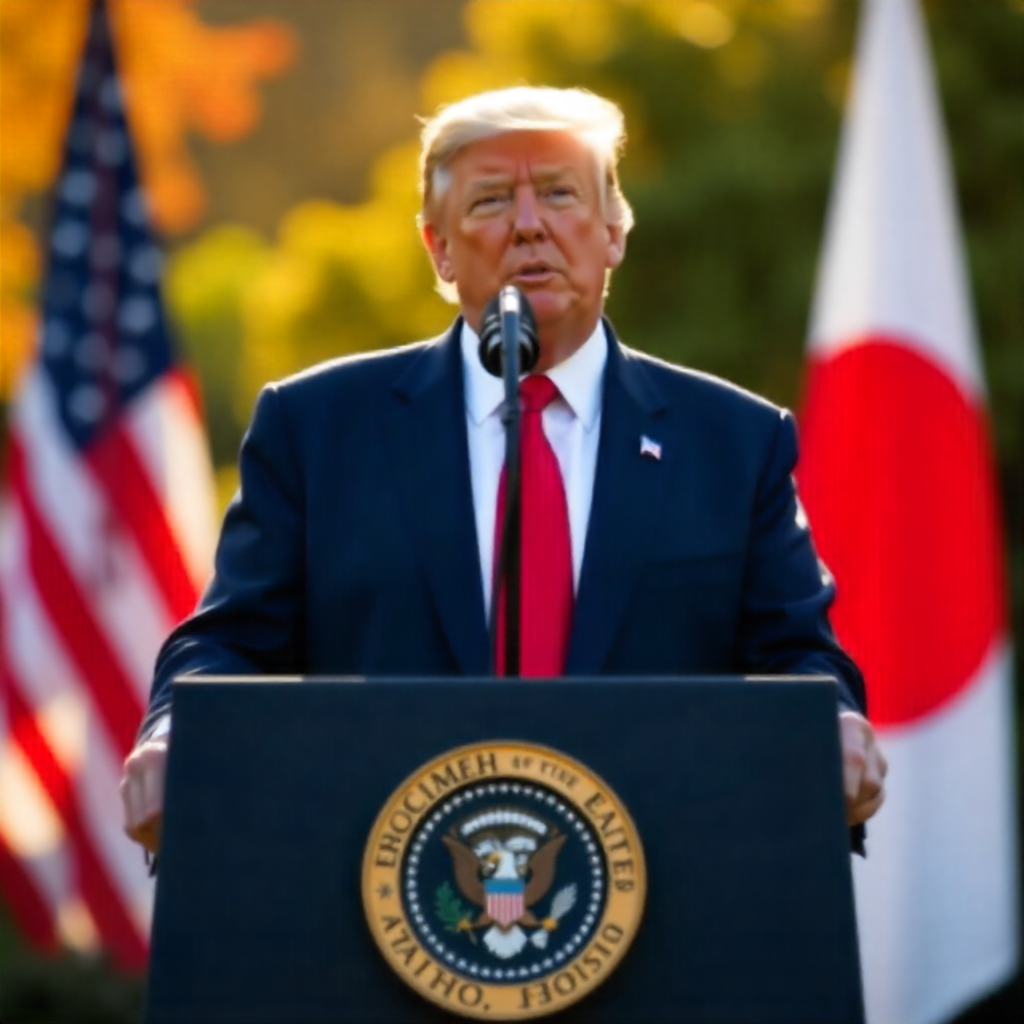
The Trump administration has unveiled what it calls a historic trade and investment agreement with Japan, though many specifics remain undisclosed. The deal, announced on July 22, 2025, signals a major milestone in U.S. Japan economic relations, positioning it as one of the largest bilateral agreements ever.(Globedge)
$550 Billion Japanese Investment into U.S.
- Japan pledges to invest $550 billion in American strategic industries, including semiconductors, critical minerals, pharmaceuticals, shipbuilding, and energy infrastructure. This marks the largest single-country foreign investment commitment in U.S. history.
(The White House) - According to the White House, 90% of profits from these investments will remain in the U.S. While this has raised questions, Tokyo disputes the profit terms as negotiable rather than guaranteed.
15% Reciprocal Tariffs Enacted
- Japanese exports including automobiles and auto parts will face a 15% U.S. tariff, down from a previously threatened 25%. For autos, this combines a 12.5% reciprocal tariff with an existing 2.5% auto import tax.
(Reuters) - Other Japanese goods that were poised to face 25% tariffs as of August 1 will now be subject to the lower 15% across the board.
Expanded U.S. Market Access
- In return, Japan will significantly expand imports of U.S. products: agriculture (rice, corn, soybeans, fertilizer), energy (including LNG), and trucks and vehicles built to U.S. standards.
(The White House)
Context & Negotiation Background
- These talks followed months of escalating tensions, with President Trump threatening 25% tariffs if no agreement materialized by August 1.
(CSIS) - Negotiations accelerated following Japan’s July 20 upper house election, creating a narrow window before the tariff deadline.
(CSIS)
Reactions and Interpretation
Japanese Perspective
- While Japanese leaders affirm the deal, Tokyo insists there’s no binding document guaranteeing U.S. profits from the investment. They stress that investment returns will depend on proportional contribution and risk.
(Financial Times) - PM Shigeru Ishiba has called for further scrutiny of the deal details, expressing cautious optimism amid domestic political uncertainty.
(CSIS)
U.S. Business and Policy Analysts
- Critics warn that U.S. automakers, like GM and Ford, may be disadvantaged: Japanese vehicles will now face lower tariffs than North American-built cars, which still face 25%.
(Barron’s) - Economists argue that the deal continues the Trump administration’s tariff-first approach, raising costs for businesses reliant on Asian imports while undermining multilateral frameworks like the CPTPP.
(The Washington Post, CSIS)
Financial Markets
- Stocks of Japanese automakers climbed markedly Toyota surged ~14%, Honda ~11% following the announcement.
(Car and Driver) - Broader optimism was seen across Asian auto-related equities and indices.
(The Week, The Guardian)
Remaining Uncertainties
- The mechanics of the investment package remain opaque: who decides where capital goes? What oversight exists? Is it a government managed fund or private venture?
(The Wall Street Journal) - No formal written agreement has been released, raising concerns about enforcement and legal binding of promises.
(Financial Times) - Negotiations over tariffs on steel, aluminum, medicines, and semiconductor chips are ongoing, and not part of the finalized deal.
(Reuters)
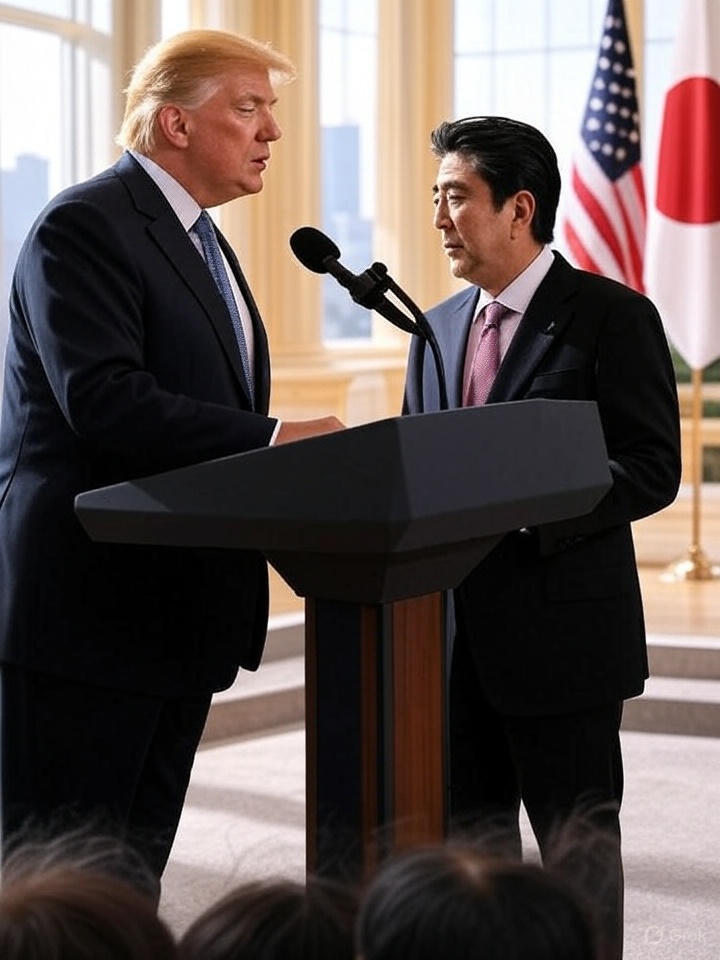
Strategic Implications
- The deal sets a precedent in the Trump administration’s reciprocal‑tariff strategy, positioning Japan as a template for deals with other trading partners ahead of the ambitious August 1 tariff deadline.
(Reuters) - It underscores growing emphasis on economic security priorities like reshoring manufacturing and securing critical supply chains in U.S. trade diplomacy.
(The White House) - However, many experts caution that without greater transparency and equitable sectoral terms, the agreement may ultimately benefit Japanese firms more than U.S. manufacturers.
(The Washington Post, Barron’s, CSIS)
Conclusion
President Trump’s agreement with Japan marks a bold shift toward reciprocal tariffs and an unprecedented investment commitment. Although described as historic, key details the structure, enforceability, and long-term terms remain unclear. While Japan benefits from tariff relief and reduced market access barriers, U.S. producers face criticism over disadvantageous trade terms. The accord signals a new trajectory in bilateral trade but leaves ample room for debate over its durability, fairness, and broader impact.