

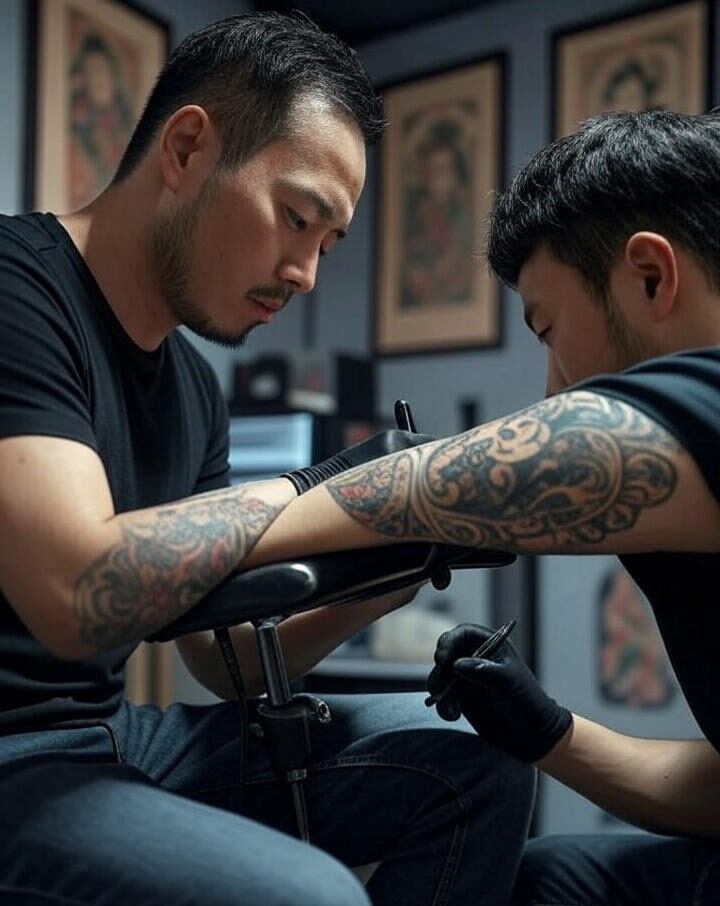
In South Korea, tattooing by non medical professionals has been illegal for over 30 years but that hasn’t stopped tens of thousands of artists and millions of clients from forging a hidden industry of body art. Between police raids, heavy fines, and a culture of secrecy, the South Korea tattoos world in Korea is in a legal limbo. But change may finally be coming. Here’s a detailed look inside this hidden world: its laws, enforcement, the lives affected, and what recent reform efforts mean.
Legal Background: Tattooing as a Medical Act
- Since 1992, a Supreme Court decision in Korea has classified South Korea tattoos including cosmetic tattooing (eyebrows, eyeliner, lips) and decorative body South Korea tattoos as a medical procedure. Under the Medical Service Act, only licensed medical doctors are legally permitted to perform tattoos.
- This classification is rooted in concerns over health risks skin piercing, potential infection, hygiene issues, and use of pigments that may have harmful substances.(Globedge)
- Because of this, non-medical tattoo artists, even if highly skilled and reputable, are operating outside the law and risk legal penalties. (LegalClarity)
Enforcement: Raids, Fines, Jail Threats
- Tattooists face possible raids. Police occasionally act on reports or tips, particularly when studios or artists are more visible (via social media, videos, or celebrity clients) or when there’s perceived risk of public health harm. Studios often hide their signs, use discreet entrances, or operate by appointment only to avoid detection. (ABC News)
- Fines can be steep. Under current law, non medical practitioners caught tattooing may face fines up to 50 million won (≈ US$35,000 to 42,000 depending on exchange rate) and/or imprisonment for up to five years. In cases linked to commercial or profit-making operations, sentences may be more severe. (e-sciencecentral.org)
- Some tattoo artists have already faced prosecution. A case in Daegu involved a woman who tattooed more than 120 people, operating without a medical license. She charged clients between ~100,000 to 1.9 million won per session. Police arrested her; clients were asked to sign agreements not to complain about side effects. (Korea Times)
- Constitutional Court rulings have repeatedly upheld the ban. In 2022, by a narrow vote (5-4), the court confirmed the Supreme Court’s stance that tattooing is a medical service. (euronews)
Culture of Secrecy & Risks
- Because of the legal status, many tattooists operate underground or in legally grey zones. Houses or apartment studios, appointments by word of mouth or social media messages, unmarked buildings all are common. (ABC News)
- Tattoo artists say they live with fear of being reported by customers (sometimes maliciously), or harassed by inspectors. Some are reluctant to advertise publicly, share their work openly, or raise prices fear of detection is ongoing. (BBC)
- Clients too face risks. Because unlicensed tattooing isn’t regulated, hygiene practices, pigment safety, sterilization, aftercare may all be inconsistent. Infections or complications may happen, but recourse is limited. Reporting or seeking legal remedy can expose both artist and client to liability.
Scope & Scale of the Industry
- Despite the ban, tattooing is common. Surveys and estimates suggest that millions of Koreans have South Korea tattoos or receive semi-permanent cosmetic body or facial tattoos. For example, one survey showed only ~1.4% of people with South Korea tattoos and ~6.8% with cosmetic ones had them done in hospitals. (AP News)
- There are many tattoo artists estimates range up to 50,000 non-medical tattooists working in the shadows. (euronews)
- The industry is partly hidden but well used: celebrities, K pop stars, influencers often have tattoos: the visibility in media and social culture has helped shift public opinion. (ABC News)
Recent Change: Reform Efforts & Tattooist Act
- There has been growing pressure for legal reform: tattooists, civil society groups, human rights commissions have argued the law is outdated, violates freedom of occupation, and doesn’t reflect social reality.
- In 2025, the National Assembly passed the Tattooist Act (unanimous vote, 195-0) to remove the requirement that tattoo artists must have medical licenses. (AP News)
- Under the new Act:
- Non-medical tattooists can be licensed under a state system.
- There will be qualifications (like exams), training in hygiene and safety.
- Tattoo parlors must register and abide by safety standards.
- The law includes a grace period of two years after formal promulgation to allow the infrastructure (exams, registration, oversight) to be set up.
- Certain restrictions remain: minors require parental consent; tattoo removal remains regulated; liability for side effects must be disclosed; registered shops are required.
What All This Means: For Artists, Clients, and Public Health
Artists
- Many currently working in secret could become legitimate professionals: safer working conditions, ability to advertise openly, less risk of legal penalties.
- Licensing and standards may raise costs (training, hygiene, liability), but also create trust in clients.
Clients
- Tattoos could become safer overall, with regulated inks, infection control, legal recourse if something goes wrong.
- More transparency about pricing, shop practices, aftercare.
Public Health & Regulation
- Legalization can allow government oversight: inspections, licensing inspections, enforcing hygiene and safety standards.
- Better handling of complaints and adverse outcomes.
- Possibly reduce underground operations that avoid oversight, but perhaps push some into still underground due to fear or inertia.
Cultural Shift
- Social attitudes toward tattoos are already changing: seen increasingly as fashion, self expression. Reform aligns law with cultural reality, reducing stigma.
- Media depictions, celebrities with tattoos, public acceptance these changes have helped press reform over decades.
Remaining Challenges & Questions
- Even with legalization, enforcement of standards will be key. Establishing fair licensing exams, reliable inspections, cost effective hygiene training are nontrivial tasks.
- Some tattooists fear the licensing system could favor larger players or those who can afford burdensome regulation, pushing small artists underground.
- Managing public health risks remains important: safe pigments, sanitation, infection control, regulated removal processes, etc.
- Ensuring clients understand risks, aftercare, and have recourse is also essential.
- Cultural stigma won’t vanish overnight especially among older generations or in conservative settings.
Conclusion
For decades, South Korea has maintained a law that classifies all tattooing as medical procedures forcing artists to work under risk of fines, raids, legal penalties, and social stigma. Despite that, tattooing has boomed underground, popularized via social media, fashion, K-pop, and personal expression. Artists and clients have navigated a clandestine industry defined by secrecy and intermittent enforcement.
The recent passage of the Tattooist Act in parliament marks a watershed moment: it ends the medical‐license requirement and promises licensing, regulation, hygiene guidelines, and legal legitimacy. But the two year transition means the shadows won’t disappear immediately. How this law is implemented fairly, safely, inclusively will determine whether the long suppressed tattoo scene in South Korea can finally step into the open, with protections for artists and clients alike.