

Day of Devastation: Two Deadly Attacks on August 21, 2025
Colombia was struck by two synchronized attacks that claimed the lives of at least 17 to 18 people (AP News, Reuters).
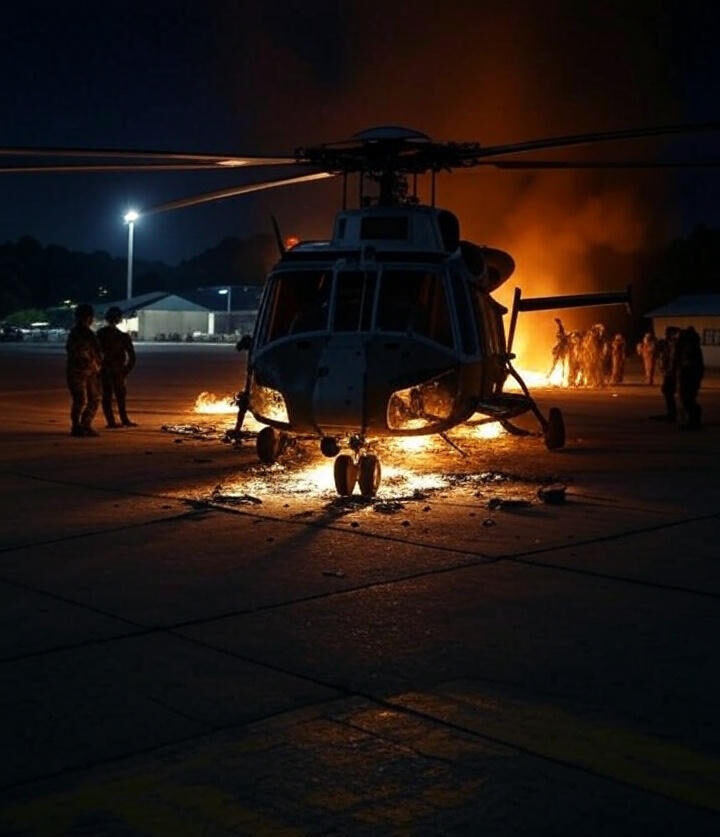
- In Antioquia near Amalfi, a National Police UH 60 Black Hawk helicopter conducting a coca crop eradication mission was downed by a drone attack, resulting in the deaths of 12 officers aboard (Reuters, AP News).
- At the Marco Fidel Suárez Air Base in Cali, a car bomb exploded near the military facility, killing five to six people and injuring dozens (Reuters, AP News, Wikipedia).
According to a consensus of reports, the combined death toll ranges from 17 to 18, with at least 40 to over 70 injured (Reuters, AP News).
Perpetrators: FARC Dissidents Targeted
President Gustavo Petro attributed both attacks to dissident factions of the defunct FARC guerrilla group, who refused to honor the 2016 peace accord (Reuters, AP News).
In the helicopter strike, initial accusations by Petro pointed to the Gulf Clan cartel, citing retaliation over a cocaine seizure. However, investigations soon shifted blame to the FARC dissidents (AP News, Al Jazeera, Reuters).
In Cali, authorities arrested a suspect linked to the Estado Mayor Central (EMC) a dissident FARC faction responsible for the car bombing(Globedge).
Wider Implications: Escalating Violence and National Alarm
- These coordinated assaults underscore a rising threat from powerful non state actors leveraging drones, Colombia, explosive devices, and guerrilla tactics. Experts note that drone attacks are becoming increasingly common in coca growing regions, making this strike far from an isolated incident (Wall Street Journal, Reuters).
- Nationwide, the violence signals a breakdown in previously tenuous peace, escalating security challenges amid a resurgence of FARC factions. Coca cultivation continues to climb, with areas under production reaching 253,000 hectares in 2023, according to UNODC data (AP News, Al Jazeera).
Government Response & Security Measures
Authorities swiftly denounced both incidents as terrorist acts. A high level security council convened to coordinate enhanced countermeasures, Colombia, particularly in coca growing regions and urban centers like Cali (Wall Street Journal, Reuters).
In response to the Cali bombing, martial law was declared, movement restrictions imposed, and a reward offered for information leading to arrests (RNZ, The Sun, Wikipedia).
Summary
On August 21, 2025, Colombia experienced one of its deadliest days in recent memory as two violent assaults alone resulted in nearly 18 fatalities and scores more injured highlighting the deepening security crisis gripping the nation. The attacks came in two distinct but alarmingly coordinated forms: a drone strike on a police helicopter in Antioquia, and a car bomb explosion near an air base in Cali.
In Antioquia, a National Police UH 60 Black Hawk was on a mission to eliminate illegal coca cultivation an operation critical to both anti narcotics efforts and public safety. As the helicopter flew over remote terrain near Amalfi, it was targeted by a drone, causing it to crash and kill 12 police officers aboard (Reuters, AP News). This tragic assault marked a grim escalation, representing the lethal combination of guerrilla warfare and modern technology.
Meanwhile, in the southwest city of Cali, a vehicle laden with explosives detonated in proximity to the Marco Fidel Suárez Military Aviation School, instantly killing five to six individuals and leaving dozens more injured (Reuters, AP News, Wikipedia). The blast caused widespread damage to nearby structures and heightened fears among residents and military personnel. The severity of the explosion, coupled with its proximity to a strategic military asset, firmly positioned it as an act of terror.
President Gustavo Petro was swift to assign blame, initially suggesting the notorious Gulf Clan cartel retaliated against the helicopter over a recent drug seizure. But further evidence and investigations redirected suspicion toward FARC dissidents, particularly factions like the Estado Mayor Central (EMC), who have rejected prior peace agreements and continue to wield formidable power across Colombia’s rural landscapes (Al Jazeera, Reuters, AP News).
These attacks carry even larger implications: they are emblematic of how fragmented armed groups once considered neutralized by peace accords have adapted and escalated their methods. Drone warfare, long confined to state actors, is now being wielded by non state militants, signaling a disturbing shift in the tactical landscape of internal conflict (Wall Street Journal, Reuters). With coca farming expanding (253,000 hectares cultivated as of 2023), the stakes in anti narcotics missions have never been higher (AP News, Al Jazeera).
In response, Colombia’s government moved rapidly to stem further violence. The defense apparatus branded both strikes as terrorist attacks, and a national security meeting was convened to evaluate and bolster protective measures across affected zones (Wall Street Journal, Reuters). Cali’s mayor imposed martial law, restricting movements and offering a hefty reward for actionable intelligence evidence of official intent to reclaim public safety and disrupt insurgent operations (RNZ, The Sun, Wikipedia).
Ultimately, these coordinated attacks on August 21 serve not just as a flashpoint of violence, but as a clarion call. They underscore the fragility of peace in post conflict Colombia and the peril posed by resurgent militant groups using evolving attack methods. As the state contends with this growing threat, the path forward will require renewed focus on security, intelligence, and community resilience to prevent such tragedies from recurring.