
What Led to the Protests?
In early September 2025, the Government of Nepal imposed a ban on 26 popular social media platforms including Facebook, WhatsApp, Instagram, YouTube, X, Reddit, and others because they hadn’t registered under newly imposed local regulations. The government justified the move as necessary to curb fake identities, hate speech, misinformation, and cyber misuse (The Guardian, mint).
However, the ban served as a trigger for widespread outrage especially among the country’s youth. This generation, often referred to as Gen Z, had already been deeply frustrated by systemic corruption, nepotism, and lack of economic and educational opportunities (The Washington Post, AP News, TIME, mint). Social media had been a vital outlet for them not just for connection, but to spotlight inequalities. Campaigns like “Nepo Kid” (highlighting politicians’ children flaunting lavish lifestyles) gained popularity, fueling anger and mobilization (The Washington Post, TIME).
Thus, while the ban sparked protests, underlying frustrations with governance and corruption were the deeper causes (The Washington Post, TIME, Globedge)
The Protests Escalate
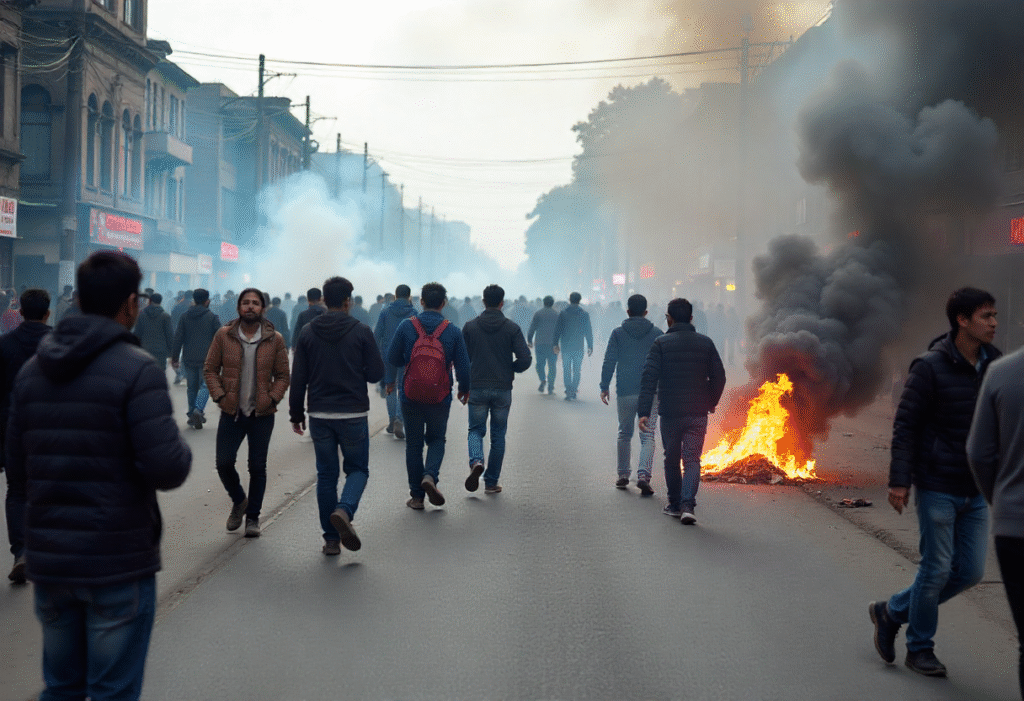
On September 8, mass protests broke out across Kathmandu and other cities, led largely by young demonstrators striking against both the social media ban and corrupt governance (The Guardian, TIME, Wikipedia). Protesters gathered at key locations like the federal parliament grounds (New Baneshwor), setting fire to barricades, tires, and later storming the parliament building itself (The Guardian, TIME, The Washington Post, Al Jazeera).
Security forces responded with tear gas, rubber bullets, and live ammunition. The violence turned tragic: at least 19 protesters were killed, and hundreds were injured including by gunshot wounds (The Guardian, AP News, The Washington Post, Wikipedia).
Amid mounting casualties, the government swiftly lifted the ban late that same night in an emergency cabinet meeting (Reuters, mint, TIME, Omni, Wikipedia).
Political Fallout
Even after the ban was repealed, protests continued to swell. Defying curfews, unrest escalated: protesters torched the homes of top political figures including the prime minister’s residence, the president’s home, and other leaders’ offices while a nationwide curfew and security lockdown were in place (The Washington Post, AP News, The Times of India, Wikipedia, Al Jazeera).
Several cabinet ministers resigned under pressure, citing moral responsibility and solidarity with the public. Among them were:
- Home Minister Ramesh Lekhak resigned immediately following the protest deaths (The Washington Post, Wikipedia).
- Agriculture Minister Ram Nath Adhikari and Health Minister Pradeep Paudel, along with others, resigned the next day (Wikipedia, The Economic Times, The Times of India, Kathmandu Post).
Then, on September 9, facing relentless protests and with even the military urging him to step aside, Prime Minister K.P. Sharma Oli tendered his resignation to the President, citing “the adverse situation in the country” and the need to resolve the crisis constitutionally (Reuters, The Washington Post, AP News, Financial Times, Wikipedia).
Aftermath and Broader Implications
Immediate Outcomes:
- Social media access restored across the country (Reuters, Wikipedia).
- 19 people killed, with over 300 or more injured during clashes.
- An investigation panel was formed and promises made for compensation and free medical treatment for victims (Reuters, The Times of India, AP News).
- Curfews and airport closure enforced, and authorities appealed for calm (Reuters, Al Jazeera, Financial Times, The Guardian).
Structural Issues Exposed:
The protests laid bare enduring discontent with corruption, nepotism, and lack of opportunities for youth. The use of social media had become a lifeline for organization and critique so the ban felt deeply oppressive (The Washington Post, TIME, AP News, mint).
Observers compared Nepal situation to broader regional patterns, like protest movements in Sri Lanka (2022) and Bangladesh, where youthful energy challenged entrenched elites (The Washington Post).
Political Shift:
With Prime Minister Oli stepping down, Nepal now faces a transitional political phase. Discussions are under way to appoint a successor, but the crisis reflects deeper questions about democratic governance, youth inclusion, and transparency (Reuters, Wikipedia, Financial Times).
Summary
Nepal Prime Minister K.P. Sharma Oli resigned on September 9, 2025, after nearly 19 people were killed in Gen Z led protests sparked by a social media ban but rooted in broad anger over corruption and oppression. Despite the ban being lifted, unrest continued, leading to the resignation of several ministers and the prime minister himself. The crisis showcased the power of youth mobilization, the fragility of political legitimacy, and the key role of digital platforms in modern civic movements.