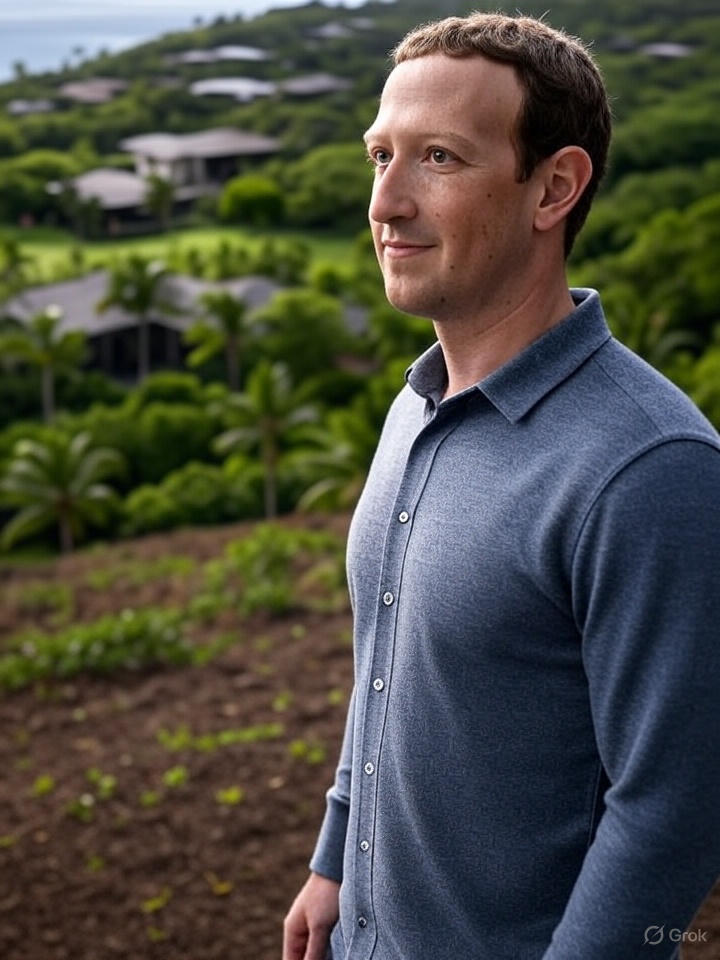
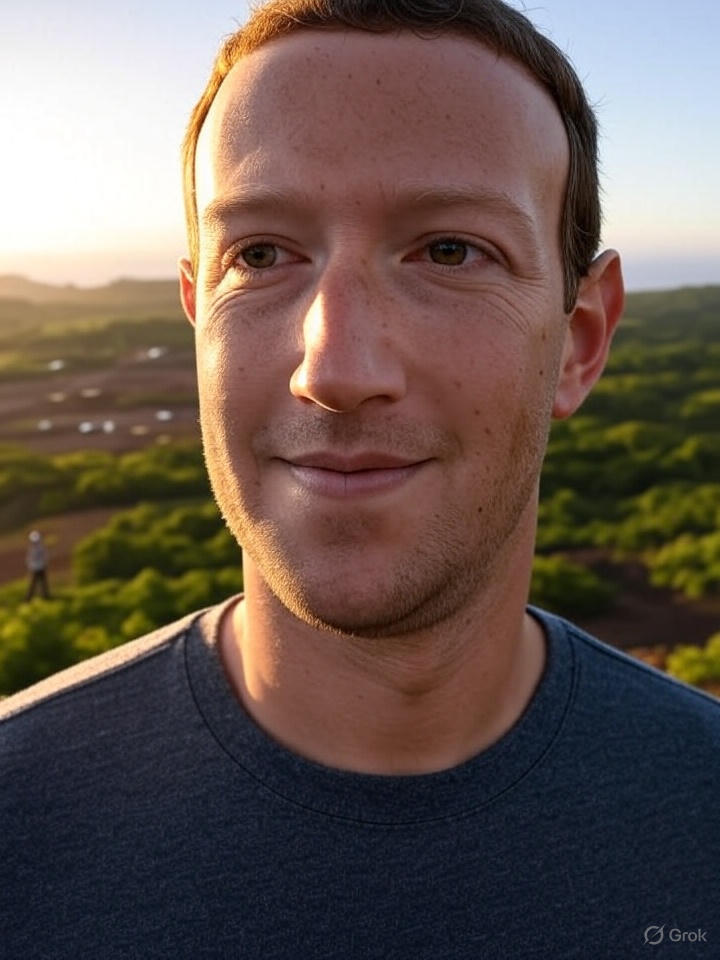
In mid‑2025, Mark Zuckerberg expanded his Koʻolau Ranch on the north shore of Kauai by acquiring 962 acres via an LLC, reportedly paying over $65 million. This brings his total land holdings on the island to over 2,300 acres, making him one of the largest private landowners in Hawaii ([turn0news12][turn0news13]).
Property records now value Zuckerberg’s estate at approximately $375 million. The ranch includes multiple mansions, guest houses, agricultural facilities, high‑security features (including an underground shelter), and permitted plans for housing over 100 people ([turn0news12][turn0news13]).
Intended Use vs. Local Concerns
Zuckerberg’s team says the land is dedicated mostly to ranching, organic farming, and conservation, including plans for cattle (Wagyu, Angus), macadamia nuts, turmeric, endangered species protection, and native plant restoration. Plans to subdivide the land into 80 luxury homes were previously scrapped after purchase ([turn0news12][turn0search5]).
However, many locals worry that continued private consolidation erodes public access and the island’s cultural integrity. The scale and secrecy of the estate—described as a “doomsday compound” by critics—adds to unease ([turn0news12][turn0news13][turn0news14]).
Cultural & Legal Tensions
Part of Zuckerberg’s expanded property sits atop or near Native Hawaiian burial sites (iwi). In 2015, local resident Julian Ako successfully registered graves of his ancestors with the state’s Department of Land and Natural Resources. Oral histories suggest more burial sites may lie beneath the property, and strict non-disclosure agreements (NDAs) for workers raise fears future discoveries won’t be publicized ([turn0news13]).
Earlier in his Kauai acquisitions, Zuckerberg filed quiet title lawsuits to clarify or buy out kuleana land rights—traditional claims held by Native Hawaiian descendants. In 2017, after public backlash describing these actions as “neocolonialism”, Zuckerberg dropped the suits and expressed regret for not better understanding Hawaiian land laws ([turn0search0][turn0search2][turn0search7][turn0search10]).
Legal critics—like law professor Kapua Sproat—have characterized the acquisitions as the modern equivalent of colonial land grabs, displacing ancestral connections and public access ([turn0search0][turn0search11]).
Community Response & Broader Implications
Some support Zuckerberg’s philanthropic efforts—donating to local schools, affordable housing, flood relief, and economic development programs, creating jobs for residents ([turn0search1][turn0search5]).
Yet many locals view the continuing land takeover by billionaires as driving housing costs up, limiting economic access and reshaping communities. As comedian-reviewer John Oliver put it, Hawaii risks being run for “everyone but Hawaiians”—a sentiment echoed across public debate ([turn0news15]).
Others point to other tech billionaires like Larry Ellison and Jeff Bezos, also owning massive Hawaiian real estate, as evidence of a systemic trend toward privatization by the ultra-wealthy ([turn0search5][turn0news15]).
What’s Next?
Ongoing development—such as three planned new buildings (7,800 to 11,000 sq ft each, for short-term guest housing)—raises both planning and access questions due to tight security (keypads, cameras, motion sensors) and potential accommodation for over 100 people ([turn0news12]).
Cultural preservation advocates are pushing for legislative reforms to protect ancestral burial sites and kuleana rights—calling for greater transparency, restrictions on NDAs, and mandatory community engagement in future land deals.
Locals emphasize the need to envision Kauai’s sustainability centuries ahead: preserving both natural landscapes and cultural traditions, not just upscale resorts and private estates.
Summary
Mark Zuckerberg’s 962‑acre expansion of his Kauai estate, via an LLC, has expanded his holdings on the island to more than 2,300 acres and sparked intense local criticism. While Zuckerberg frames the move as a conservation-driven ranching project, concerns over hidden burial sites, restricted beach access, rising land values, and the use of quiet title lawsuits have reignited debates around land justice, cultural preservation, and the role of billionaire ownership in Hawaii’s future.