
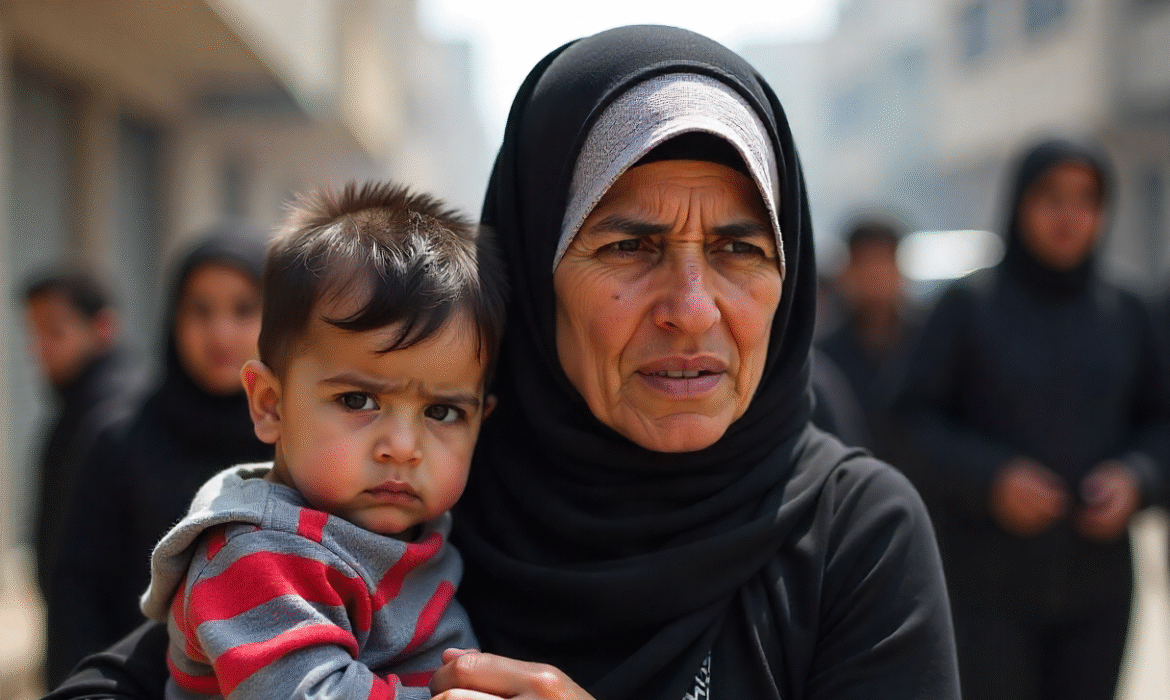
1. The Evacuation Order
On September 9, 2025, the Israeli military urgently ordered a full evacuation of Gaza City, home to approximately one million Palestinians, as it prepares for a significant military offensive. This marked the first time during the current conflict that an evacuation order covered the entire city.(Reuters, AP News, Wall Street Journal)
Spokesperson Avichay Adraee emphasized the danger of staying, stating: “Staying in the city is extremely dangerous.” Leaflets outlining evacuation routes toward the designated humanitarian zone in al Mawasi, southern Gaza, were distributed.(AP News, ABC News, Межа. Новини України.)
2. Military Escalation and Ground Offensive
Prime Minister Benjamin Netanyahu made a pointed warning: “This is only the beginning of an intensified ground maneuver in Gaza City.” The Israeli military is reportedly already in control of around 40% of the city, with operations aimed at dismantling Hamas’s last stronghold.(AP News, Reuters, Wall Street Journal, Межа. Новини України.)
Recent airstrikes have demolished dozens of high rise buildings referred to by Israeli officials as “terror towers” which they claim are being used by Hamas for military infrastructure. Israeli Defense Minister Israel Katz echoed this escalation, calling the bombings “only the introduction” to a broader ground invasion.(AP News, The Times of India, WLWT, Wall Street Journal, Межа. Новини України.)
3. Impact on Civilians & Humanitarian Concerns
Despite the evacuation pleas, only a small fraction of Gaza City’s residents estimated at 70,000 or less have left their homes. Factors such as cost, uncertainty, insufficient shelter capacity, and exhaustion from previous displacements have hindered compliance.(AP News, Reuters, Wall Street Journal, Межа. Новини України., The Guardian)
Humanitarian organizations have raised alarm. The Red Cross President, Mirjana Spoljaric, warned that a mass evacuation is “unsafe and unfeasible,” noting that southern Gaza cannot absorb such a large influx. Essential services food, shelter, medical care are already stretched beyond capacity.(Reuters)
Evacuation costs alone exceed $1,000 per family, creating a financial barrier to compliance. Also, despite being designated a humanitarian zone, al Mawasi has not consistently proven to be safe, with continued bombing reported even after areas were labeled as shelters.(AP News, The Guardian, Wall Street Journal, Reuters)
4. Broader Political Strategy & Context
This latest offensive follows August 2025 security cabinet approval for the takeover of Gaza City part of a larger campaign to dismantle Hamas’s territorial strongholds. The IDF is reportedly calling up 60,000 reservists and escalating troop mobilizations across the enclave.(Globedge).
In April 2025, Netanyahu’s government proposed plans for a weeks or months long campaign to seize Gaza, potentially transferring control to Arab forces once Hamas is neutralized.(TIME)
Critics have warned of profound humanitarian consequences. The United Nations and human rights groups caution that a full scale assault on a city already facing starvation, widespread displacement, and collapsing infrastructure would be catastrophic.(The Guardian, TIME, Reuters)

5. Why It Matters
- Humanitarian Crisis: The order risks exacerbating famine, displacement, and civilian casualties in an area already in crisis.
- Escalation of Conflict: Netanyahu’s warning “only the beginning” signals that this may be the start of a broader, more intense ground campaign.
- Global Scrutiny: International actors, including the UN, humanitarian organizations, and foreign governments, are increasingly alarmed by the prospect of full conquest of Gaza and mass civilian displacement.
- Political Dynamics: Israel’s approach may heighten pressure on Hamas but also amplifies global calls for ceasefire and negotiation.
Summary
On September 9, 2025, Israel ordered the full evacuation of Gaza City ahead of a planned ground offensive, prompting dire humanitarian warnings. Prime Minister Netanyahu declared the move was “only the beginning” of intensified operations. Only a small share of residents have fled, enduring logistical, financial, and safety barriers. Meanwhile, global aid agencies and the Red Cross warn such an evacuation is unfeasible and dangerous under current conditions. The decision forms part of a broader Israeli strategy to dismantle Hamas’s infrastructure, force territorial control, and potentially reshape governance in Gaza.