
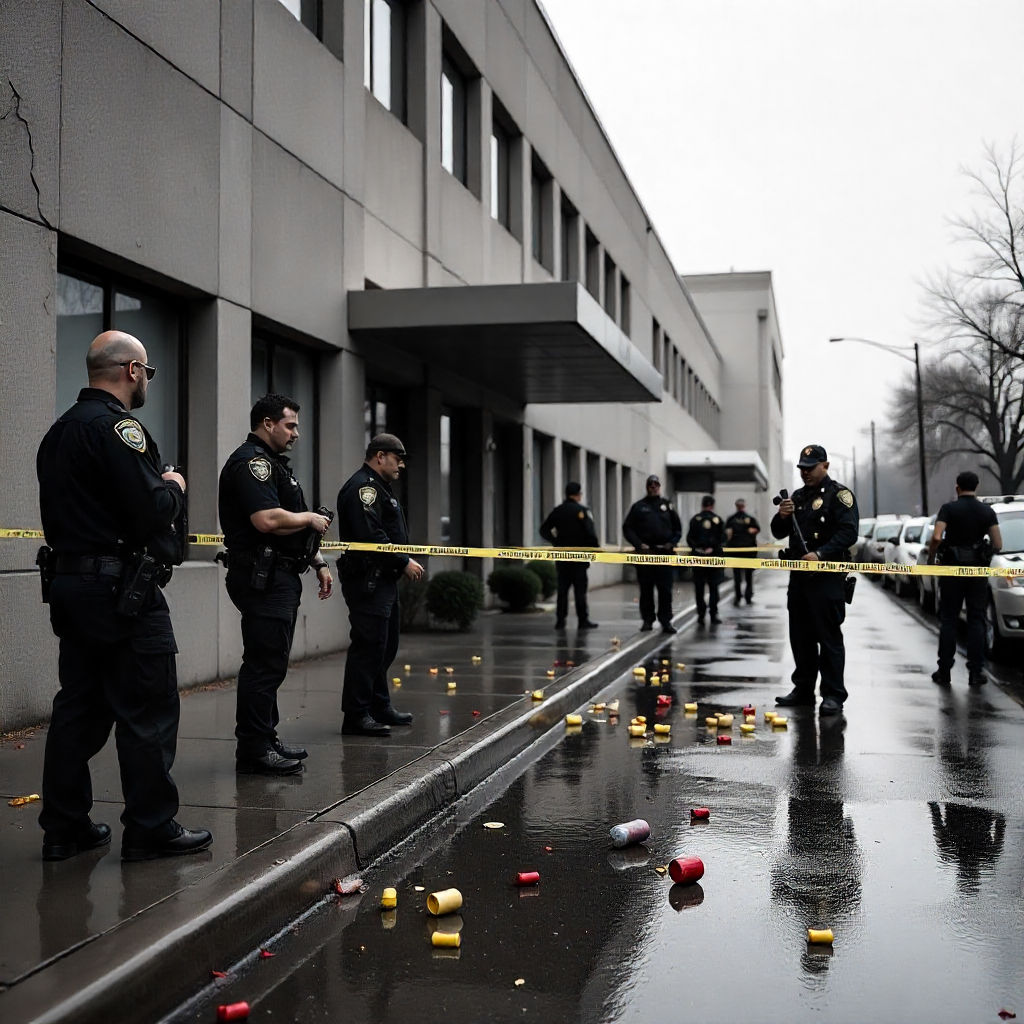
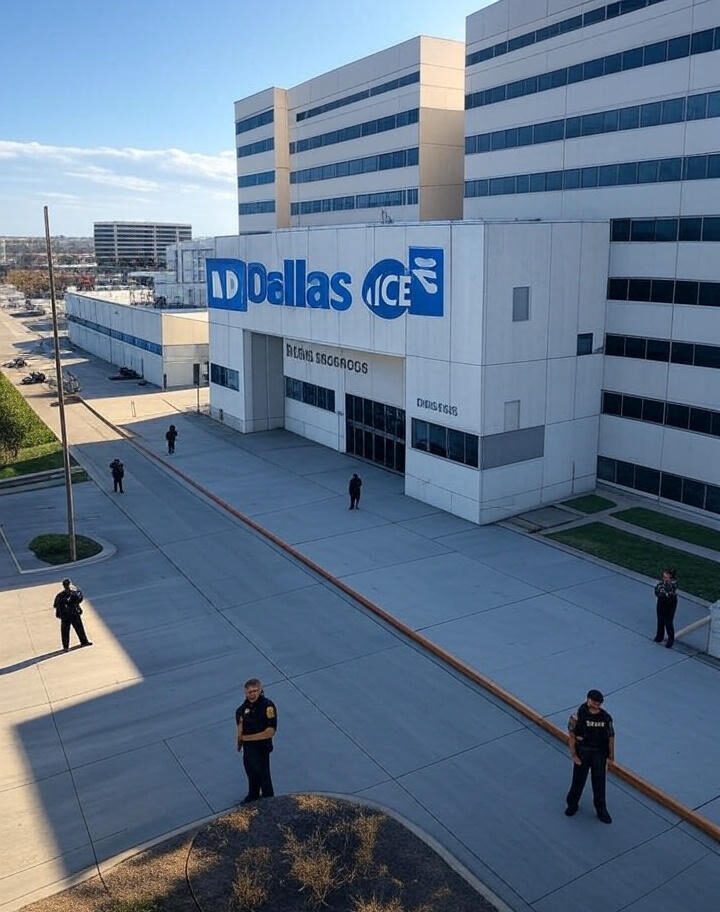
September 2025, a dramatic sniper attack on a U.S. Immigration and Customs Enforcement (ICE) facility in Dallas, Texas, captured national attention. But it was not an isolated incident: it forms part of a worrying pattern of at least four attacks or threats against ICE or U.S. Border Patrol installations in Texas this year. Below is an analysis of the Dallas shooting and how it fits into a broader trend.
The Dallas Sniper Attack: What Happened
On the morning of September 24, 2025, a gunman opened fire from a rooftop at the ICE field office in Dallas, targeting a van in the facility’s “sallyport” the secured entry/exit zone used to transfer detainees. One detainee was killed, two others were critically injured, and the shooter then died by suicide. No ICE staffers or agents were hurt. (AP News)
Investigators recovered shell casings inscribed with “ANTI-ICE,” leading them to treat the crime as ideologically motivated. (Reuters) The Department of Homeland Security labeled the act a “targeted attack on ICE law enforcement.” (U.S. Department of Homeland Security)
The Dallas ICE field office had also recently been subject to a bomb threat in August 2025, when a man claimed to carry a bomb and displayed a “detonator” strapped to his wrist. (CBS News)
In response, DHS placed ICE facilities across the country on higher alert. (ABC News) Texas Governor Greg Abbott condemned the act as “horrific” and promised support for federal investigations.(Globedge)
Other Incidents in Texas in 2025
While the Dallas shooting is the most lethal among recent attacks, several similar incidents earlier in 2025 reflect an escalating trend of violence and threats targeting U.S. immigration enforcement in the state.
1. Alvarado ICE Facility Attack (July 4, 2025)
On Independence Day evening, a coordinated assault targeted the Prairieland ICE detention center in Alvarado, Texas. Attackers deployed fireworks and vandalism to create distractions and then opened fire, striking at arriving law enforcement. One local officer was wounded in the neck. (Wikipedia)
Investigations found that the group had prepared tactical equipment (body armor, radios) and left behind propaganda materials with slogans like “Fight ICE terror.” (Wikipedia) By September 2025, at least 17 suspects had been arrested in connection with the attack. (Wikipedia)
2. McAllen Border Patrol Annex Shooting
In the Rio Grande Valley, a gunman, later identified as 27 year old Ryan Louis Mosqueda, attacked a U.S. Border Patrol sector annex in McAllen, Texas. He fired on federal agents and private property, injuring three individuals (a Border Patrol officer, a CBP employee, and a McAllen police officer). Law enforcement returned fire, killing the attacker. (U.S. Department of Homeland Security)
During the confrontation, the assailant’s vehicle bore graffiti reading “Cordis DIE,” hinting at possible ideological motivations, though no definitive manifesto has been disclosed. (AP News)
3. Attack on McAllen Border Patrol Annex (Same event, as above)
The CBP’s own summary of the incident confirms that the gunman approached the annex, exited his vehicle, and commenced firing before the situation was neutralized. (U.S. Customs and Border Protection)
While these three events are the most publicly documented, the Dallas shooting is regarded by some sources as at least the third shooting at a Department of Homeland Security (DHS) facility in Texas in 2025. (Reuters)
Shared Patterns & Implications
Commonalities
- Targeting federal immigration facilities and personnel: Whether ICE detention centers or Border Patrol annexes, attackers appear to aim at federal immigration enforcement as an institution.
- Use of firearms / tactical planning: The Dallas sniper used a bolt-action rifle from an elevated position; Alvarado assailants used AR style rifles with coordination; McAllen shooter used an assault-style rifle. (Wikipedia)
- Ideological markers: The Dallas shells marked “ANTI ICE” and graffiti like “Cordis DIE” in McAllen suggest symbolic messaging. (Reuters)
- Escalation beyond threats: What might have begun as verbal or symbolic threats is now manifesting in violent physical attacks with serious casualties.
- Geographic clustering: All known incidents occurred in Texas, reflecting the state’s central role in U.S. immigration and border enforcement.
Differences & Caveats
- Number of casualties: The Dallas shooting is the most deadly so far, with at least one detainee dead. The Alvarado incident injured a law enforcement officer but caused no deaths (among attackers or officials). (Wikipedia)
- Intended vs. actual target: In Dallas, detainees were struck possibly collateral victims while ICE staff were unharmed. In McAllen, Border Patrol and local police were directly engaged.
- Public motive disclosure: Investigations are nascent; in most cases, motives remain officially unconfirmed.
Broader Context & Risks
The attacks come amid rising polarization over immigration and border security debates in the U.S. In this polarized environment:
- Rhetoric may stoke violence: DHS officials warned that demonizing ICE or likening it to oppressive regimes can have real-world consequences. (U.S. Department of Homeland Security)
- Law enforcement under threat: Some ICE officials say assaults on ICE officers have surged in 2025, possibly by over tenfold. (ABC News)
- Security challenges: Federal facilities, often dispersed or co located in urban settings, present vulnerable points of access, especially during detainee transfers or in peripheral structures (e.g. rooftops)
- Investigative complexity: Determining whether these attacks are coordinated or spontaneous, and whether they connect to broader extremist networks, is critical but challenging.
Conclusion
The Dallas ICE facility shooting is among a series of attacks and threats in Texas during 2025 that target ICE and Border Patrol infrastructure. From a bomb threat to a coordinated assault in Alvarado and a Border Patrol station shooting in McAllen, the incidents show a troubling escalation in violence directed at federal immigration enforcement. The growing frequency, the crossing into lethal force, and signs of ideological symbolism demand heightened security, deeper investigations, and a careful reckoning with how political and public discourse may influence real-world violence.