
Why global competition for talent matters
In the 21st century, scientific, technological, and innovation leadership is a key pillar of national power. It’s not just about patents, factories, or market scale it’s about who can attract, retain, and mobilize top researchers, entrepreneurs, and engineers. Countries that secure the best human capital in frontier domains like artificial intelligence, biotechnology, quantum computing, and climate science gain a multipronged advantage: better innovation output, higher spillovers, stronger geopolitical influence, and more resilience in an era of rapid change. Historically, the U.S. has been the dominant magnet for global talent from Europe, Asia, Latin America because of its research universities, funding ecosystem, open immigration pathways, and a culture of academic freedom. But in recent years, China has mounted a concerted strategy to close the gap. The question now is: in which respects is China gaining ground, and what obstacles remain?
China’s talent attraction strategy: from returnees to foreigners
2.1 Historical focus: “reverse brain drain” and return migration
China’s earliest serious efforts to harness global talent centred on enticing Chinese nationals educated or working abroad to return. Programs such as the Thousand Talents Plan (later evolved into broader “High-end Foreign Experts Recruitment Programs” and “Qiming” plans) offered substantial incentives cash bonuses, startup funding, housing support, visa privileges to lure overseas Chinese researchers back to China. (Wikipedia)
These policies leveraged China’s large diaspora and made return a relatively easier decision for researchers who already had cultural or educational ties to China. Data suggests these programs have had some success in persuading scientists of Chinese origin to reverse-migrate. (MERICS)
However, the hurdle has been greater in attracting foreign talent with no prior link to China. A MERICS report notes that China still struggles to bring in high-quality researchers who do not have a preexisting connection (e.g. language, cultural familiarity, education, networks) to China. (Globedge)
2.2 Upgraded approach: opening to global STEM talent
More recently, China appears to be broadening its net. It has introduced policies that reduce entry barriers for talented foreigners in science, technology, engineering, and mathematics (STEM). For example:
- In 2025, China launched a “K visa” targeting young foreign STEM graduates, allowing them to enter, live, and work in China without needing a job offer upfront a departure from more rigid visa regimes. (Reuters)
- Along with that, local governments sometimes offer generous “return bonuses,” research start-up funds, and other inducements. (Illuminem)
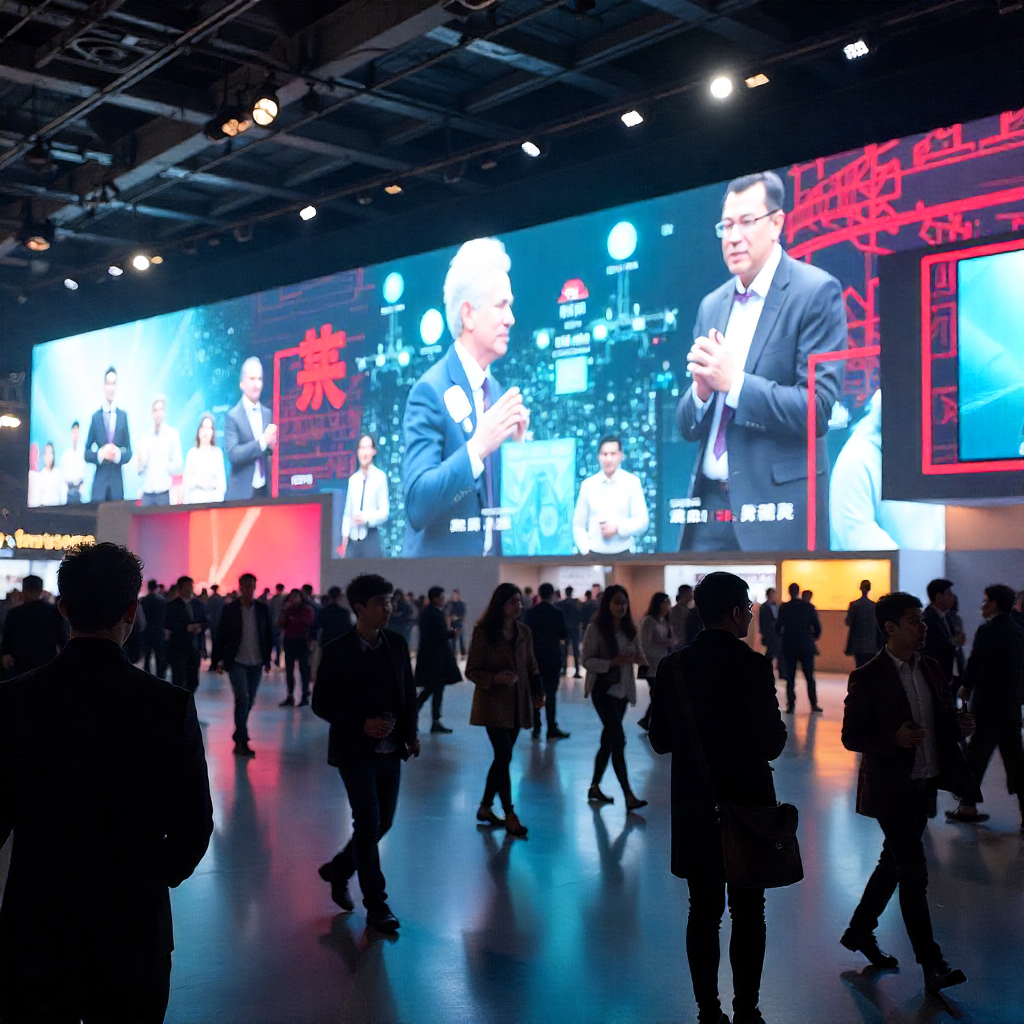
- The Conference on International Exchange of Professionals (CIEP) is a recurring national event (held in Shenzhen) that showcases opportunities and networks for global professional exchange. (Wikipedia)
This newer approach signals that China is not only trying to reclaim its diaspora but is actively positioning itself as a destination for global tech talent more broadly.
Evidence that China is gaining ground
3.1 Research output, STEM pool, and institutional growth
- According to MERICS, China is now the world’s second largest STEM talent pool, rapidly closing the gap with the U.S. (MERICS)
- In key cutting edge fields, China’s research output has scaled massively. For instance, recent studies show China now leads the U.S. in the volume of AI research publications, though in quality metrics (e.g. citations, novelty) the U.S. still holds an edge. (arXiv)
- Collaboration between U.S. and Chinese researchers in AI tends to yield higher impact than either working alone, showing that China is part of high-end global networks. (arXiv)
- A piece in 36Kr reports that “half of the world’s AI talent are Chinese” especially visible in top U.S. AI labs: about 38% of researchers there are Chinese, slightly more than those from the U.S. itself. (36Kr)
These trends reflect not just large numbers but integration of Chinese researchers into elite global research hubs.
3.2 Brain circulation / return migration
- Since early 2024, at least 85 scientists working in the U.S. have joined Chinese institutions full time more than half of them in 2025 alone. (Illuminem)
- The “China Initiative” in the U.S., launched under the Trump administration, had negative spillovers: many Chinese-origin researchers felt investigated or scrutinized, discouraging applications for U.S. grants and prompting return to China. (arXiv)
- Some analyses find a growing trend in return migration among Chinese origin scientists, especially under domestic policies that reward returnees. (arXiv)
Thus, China is leveraging both push factors (incentives to leave the U.S.) and pull factors (domestic rewards) to shift talent flows.
3.3 U.S. headwinds and relative weakening
China’s gains are partly enabled by challenges in the U.S.:
- Tighter visa regimes and higher barriers for international scholars reduce the attractiveness of the U.S. as a destination. For example, H-1B visas have become costlier and more restrictive. (Reuters)
- Cuts in U.S. federal research funding and increased scrutiny of foreign-born scientists raise uncertainty and reduce the stability of academic careers in the U.S. (Axios)
- The departure, retirement, or disillusionment of existing researchers may gradually erode U.S.’s scientific edge if replacement pipelines weaken.
In short, China is closing the gap not just by pushing its own strategies, but also taking advantage of relative brittleness in the U.S. talent ecosystem.

Strengths and challenges in China’s rise
4.1 Strengths
- State capacity and concentrated resources
China’s governance model allows large-scale mobilization of capital, infrastructure, and coordination across national, provincial, and local levels. It can fund priority sectors (semiconductors, AI, biotech) and tie talent policies directly to industrial strategy (e.g. Made in China 2025) (Wikipedia) - Domestic scale and market demand
A large, dynamic domestic economy can absorb talent, provide research and commercialization opportunities, and reward local innovation. That makes staying in China more credible for scientists who might otherwise go abroad. - Cultural, linguistic, and network pull for Chinese diaspora
The fact that many target researchers have prior educational or cultural familiarity with China lowers cognitive, social, and network friction. Programs that emphasize return for ethnic Chinese are easier to sell than those targeting foreigners with no link. (MERICS) - Flexible visa and incentive reforms
Recent moves like the K visa and local incentives signal that China is reducing structural barriers and adapting to global competition. (Reuters) - Strategic alignment with national goals
China explicitly frames talent recruitment as part of its ambition to be a global center of scientific technological leadership by 2030 to 2035. (MERICS)
4.2 Challenges and constraints
- Difficulty attracting unconnected foreign talent
To date, China finds it much harder to entice researchers who lack prior ties. In ORCID data, only about 11 % of those employed in China lacked any earlier education link to China. (MERICS) - Barriers in academic freedom, language, and openness
For many foreign researchers, concerns about censorship, intellectual freedom, and political constraints remain significant barriers. Language barriers and culture also limit full inclusion. - Quality vs. quantity trade-offs
While China can scale large numbers of researchers, achieving top tier breakthroughs still lags. The U.S. remains dominant in many quality metrics (top journal impact, research prizes, Nobel laureates). (arXiv) - Retention and institutional ecosystems
Talent must not only be recruited but sustained: through mentoring, career pathways, competitive research environments, and integration into international networks. Some returnees find navigating bureaucracies, local politics, or institutional constraints challenging. - Geopolitical backlash and “tech denial” tactics
As U.S. and allied countries tighten export controls, research cooperation restrictions, and vet foreign researchers more critically (citing security concerns), China faces headwinds in accessing global networks. (MERICS)
Moreover, scrutiny of programs like the Thousand Talents Plan has made some foreign researchers wary of participation. (Wikipedia)
Comparative position: How close is China to catching up?
China is meaningfully gaining ground, but it is not yet equal to the U.S. in deep scientific leadership. Some comparative observations:
- Breadth vs. depth: China now competes across many fields (AI, biotech, quantum), but in many frontier subdomains, the U.S. still leads in breakthroughs, prizes, and scientific culture.
- Talent pipeline: The U.S. still attracts many of the world’s top PhD students and postdocs across continents; China’s pipeline expansion is catching up, especially regionally, but not yet globally dominant.
- Open networks: The U.S. still draws from a more diverse global base, with many non Chinese nationals leading labs. China’s strongest gains are among Chinese diaspora and Asian countries.
- Risk and resilience: The U.S. research system benefits from pluralism, institutional autonomy, and diversity of funding sources. China’s more centralized model may face systemic stress if political constraints or global decoupling intensify.
But the trend is unmistakable: China is no longer a marginal player it is now a serious contender in the global race for scientific talent. If current momentum continues, it could shift the balance of innovation leadership in the decades ahead.
Implications and what to watch
- Global science geopolitics
As talent becomes more competitively mobilized, research agendas may align with national strategic priorities. Cross border collaboration may be harder to maintain, and scientific “bifurcation” along geopolitical blocs may deepen. - Talent flows beyond U.S. China
Some researchers may avoid either extreme and go to Europe, Singapore, or other emergent hubs. China’s challenge is to make itself more globally attractive beyond regional peers. - Academic and ethical standards
China’s efforts must maintain international norms of rigor, integrity, transparency, and academic freedom or risk reputational pushback from top researchers. - U.S. response and countermeasures
To maintain its edge, the U.S. may need policy reforms: streamlined visas for researchers, sustained research funding, protections for foreign-born scientists, and more openness. Without that, further erosion is possible. - Talent retention is as important as recruitment
Recruiting stars is just step one. How China integrates them into stable institutions, gives them autonomy, nurtures their careers that will determine long-term success.
In conclusion
China is increasingly serious about competing for the world’s brightest minds, leveraging its state capacity, market scale, diaspora networks, and reform momentum. While it still lags in attracting unconnected foreigners and matching the U.S. in depth of innovation, its trajectory is upward and accelerating. The U.S., which once held a near monopoly on global scientific talent, must adapt or risk ceding leadership over time.