
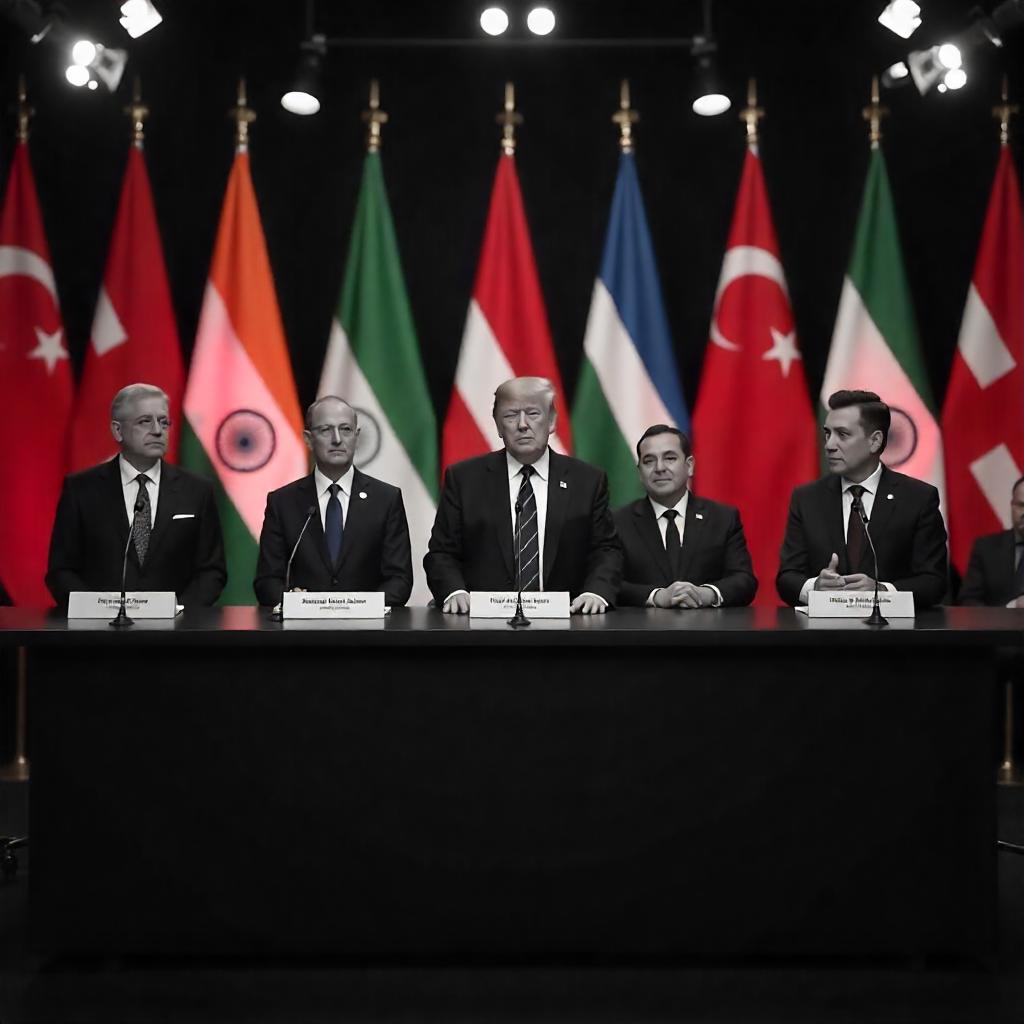
BRICS Nations Hit Back at ‘Emperor’ Donald Trump Over Tariff Threat
In a sharp rebuke to former U.S. President Donald Trump’s recent threats of imposing sweeping tariffs on countries aligned with BRICS, the member nations have responded with defiance and unity. The BRICS bloc—comprising Brazil, Russia, India, China, and South Africa—condemned Trump’s rhetoric as “neo-imperial” and warned against protectionist policies that could destabilize global trade.
Trump, in a fiery speech at a campaign rally, referred to BRICS as “anti-American” and threatened to slap punitive tariffs on nations that “work against U.S. interests.” He accused BRICS of trying to undermine the dollar, support adversaries like Iran and Russia, and create a parallel global order.
 ponse, BRICS nations issued coordinated statements emphasizing the group’s commitment to multilateralism and economic cooperation. Chinese officials labeled Trump’s threats “unilateral bullying,” while Russia likened the former U.S. president to a “self-proclaimed emperor” trying to dictate terms to sovereign nations. India, taking a more diplomatic tone, reaffirmed its independent foreign policy and rejected “external pressure on strategic alignments.”
South Africa’s foreign ministry stated that BRICS is a forum for development, not confrontation, and that Trump’s remarks “reflect a Cold War mentality no longer viable in a multipolar world.” Brazil’s response highlighted how global economic cooperation, not division, is essential for post-pandemic recovery and sustainable growth.
Many analysts believe Trump’s remarks are aimed more at energizing his domestic base than setting actual foreign policy. Nevertheless, the comments have sparked concern about renewed trade tensions if he returns to power in 2025. During his first term, Trump aggressively used tariffs to pressure China and other trading partners, triggering a global trade war that disrupted markets and supply chains.
BRICS nations, meanwhile, are accelerating efforts to reduce dependency on the U.S. dollar in cross-border trade, with initiatives like the BRICS Pay digital system and discussion of a possible joint currency. These moves are often perceived in Washington as strategic challenges to American financial dominance.
Experts argue that Trump’s confrontational stance could backfire by pushing more countries into closer alignment with BRICS. “Labeling every alternative alliance as anti-American isolates the U.S. rather than strengthening it,” said an international trade analyst based in Geneva.
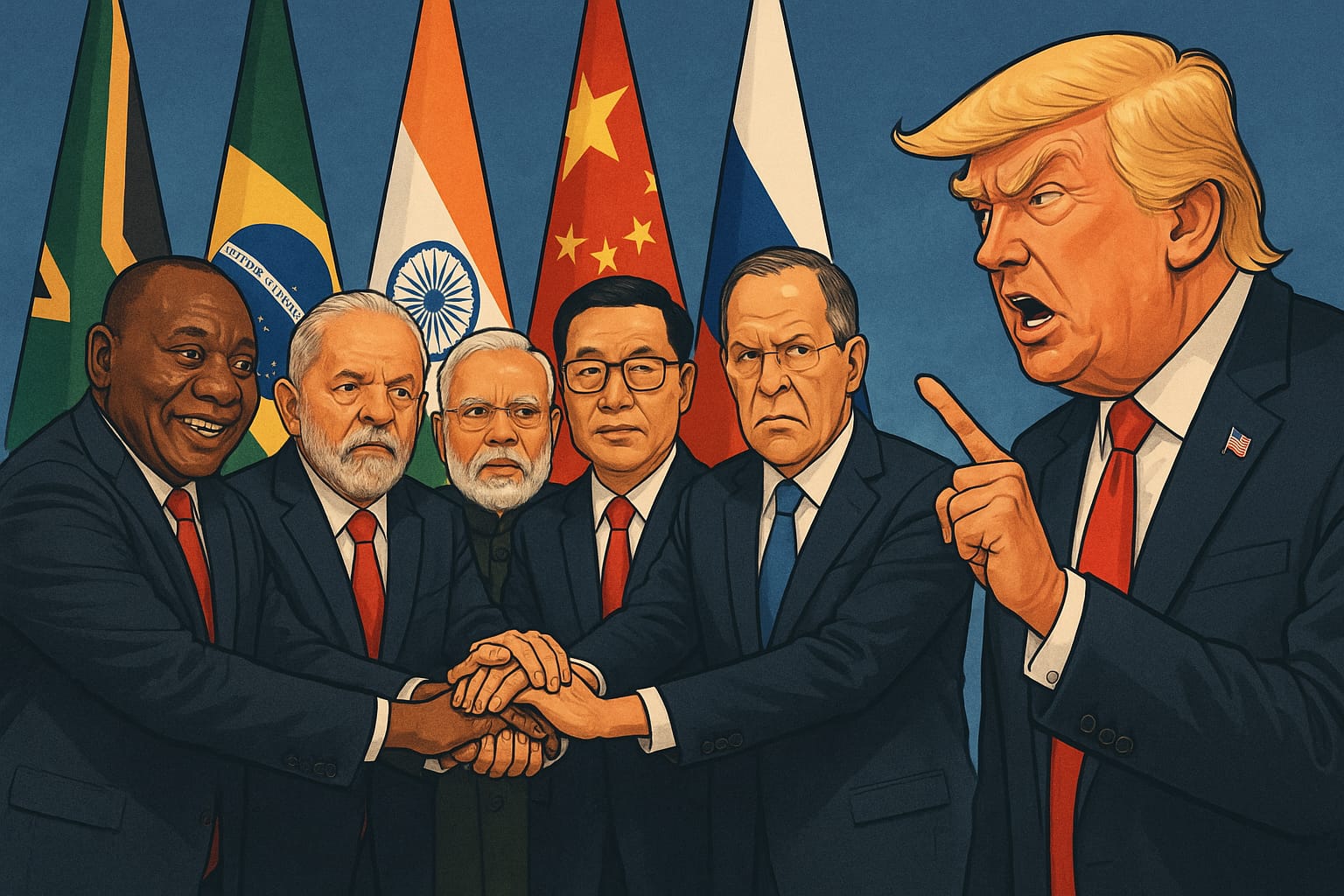
As global geopolitics continue to shift, the clash between nationalist protectionism and multilateral cooperation remains central. BRICS, now expanding with new members like Egypt, Iran, and Ethiopia, seeks to assert a stronger voice in global governance. Trump’s tariff threats may ultimately underscore the very reason BRICS exists—to resist unilateralism and build a more balanced international system.