
What is being announced / what happened
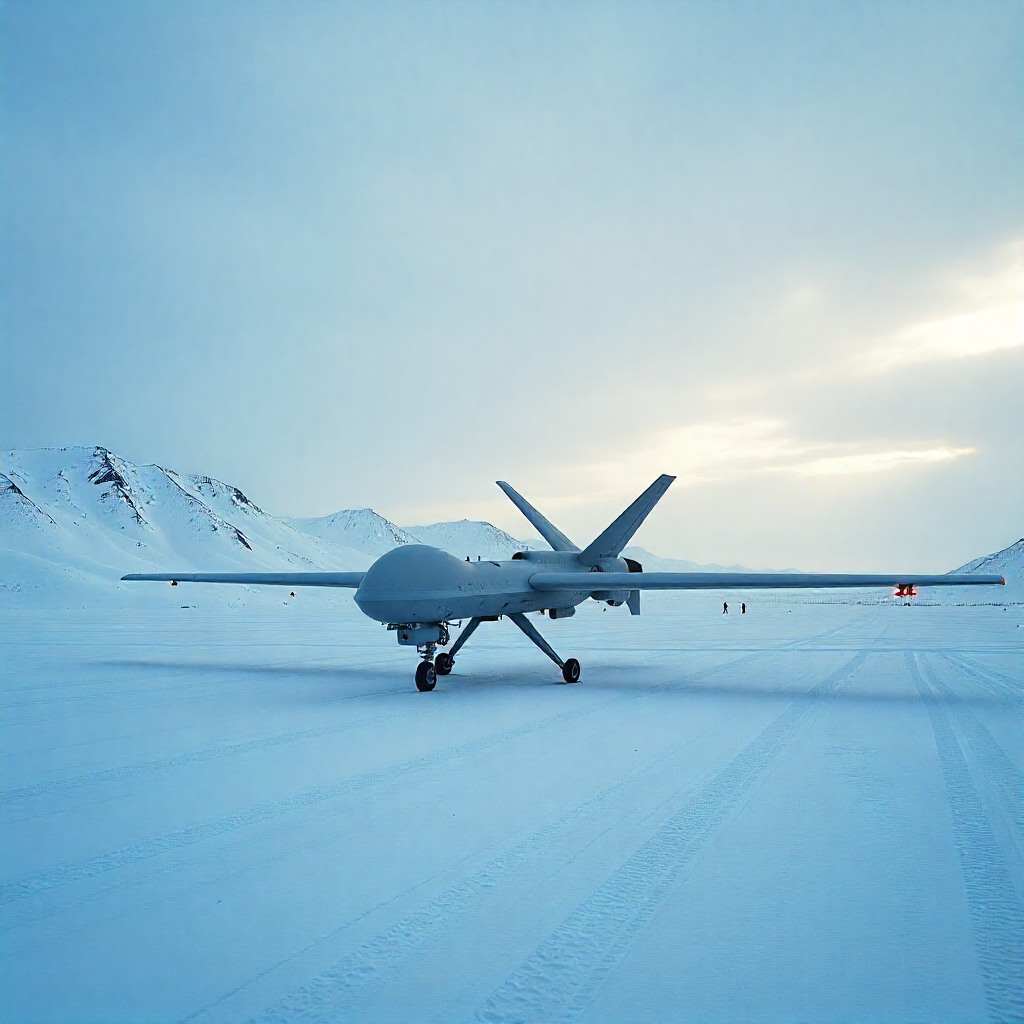
- The U.S. Air Force has reactivated the 431st Expeditionary Reconnaissance Squadron, stationed at Gunsan (Kunsan) Air Base on South Korea’s west coast, with a permanent deployment of MQ-9 Reaper drone unmanned aerial vehicles (drones). (Ground News)
- Media coverage frames this as a “new Reaper drone unit 250 miles from China,” emphasizing the proximity to Chinese territory or maritime zones. (AOL)
- The activation revives a World War II era squadron, repurposed today to operate drones for intelligence, surveillance, reconnaissance (ISR), and possibly strike missions. (Ground News)
- According to one report, the U.S. and South Korea say this deployment enhances surveillance and reconnaissance along the Korean Peninsula and the broader Indo-Pacific region. (Ground News)
Thus, the basic fact: the U.S. now has a permanent MQ-9 Reaper drone presence in South Korea, relatively close to (hundreds of miles from) Chinese territory or areas of interest, thereby extending U.S. unmanned capabilities in the region.
Technical & operational context
The MQ-9 Reaper: capabilities & purpose
- The MQ-9 Reaper drone , built by General Atomics, is a medium altitude, long endurance drone commonly used in ISR, target acquisition, and in some operations, strike missions (armed variants). (Wikipedia)
- It can fly long hours (20+ hours depending on configuration), carry sensors (electro optical, infrared, synthetic aperture radar) and, in armed setups, carry munitions like Hellfire missiles or laser-guided bombs. (Daily Express US)
- Its range and loitering ability make it useful for persistent surveillance over areas of interest (maritime zones, contested airspace, border zones) as well as rapid response to emerging targets.
With the MQ-9 Reaper drone , the U.S. can maintain a near continuous eyeball over parts of the Yellow Sea, East China Sea, maritime approaches off China, North Korea, or Taiwan, depending on flight paths and agreements.(Globedge)
Geography and strategic distance
- The “250 miles from China” phrasing likely refers to a rough distance from the base in Gunsan or its operational coverage zone to parts of China’s coastline or maritime zones. It’s not a precise figure but indicates proximity to Chinese maritime influence zones or contested sea areas.
- From western South Korea, Reaper drones can reach parts of the Yellow Sea and East China Sea; they might surveil Chinese naval or air activity, monitor shipping lanes, or keep an eye on maritime domain awareness in contested zones.
Thus, this deployment places U.S. unmanned surveillance capability relatively close to China’s near seas enhancing U.S. eyes-on presence in contested maritime and aerial domains.
Strategic rationale: why the U.S. is doing this
Strengthening deterrence and intelligence posture
- The Indo Pacific theater has become a focal point of U.S. strategy, particularly in countering China’s growing naval, air, and missile capabilities. Having drones based in South Korea gives the U.S. better ISR reach over East Asia.
- Permanent drone presence signals a stronger U.S. commitment to allies (notably South Korea) and to maintaining persistence in monitoring, early warning, and response capacity in the region.
Flexibility & rapid reaction
- UAVs like the Reaper provide flexibility: they can respond quickly to emerging crises, monitor gray zone activity (e.g. maritime harassment, missile launches, surveillance), and function with lower risk to human pilots.
- Drones can complement manned assets (fighters, patrol aircraft) by handling routine surveillance, freeing manned platforms for high value missions.
Alliance integration & burden-sharing
- Embedding a permanent drone unit in South Korea underscores joint U.S. ROK military integration. It provides a shared ISR asset for allied operations.
- It may relieve pressure on U.S. assets stationed farther away. Also, it strengthens deterrence against North Korea, while also projecting into broader theaters (Taiwan Strait, East China Sea) as needed.
Competition signaling
- The move also sends a signal to China and other regional actors that the U.S. is expanding its unmanned capabilities and is serious about sustaining presence close to contested zones. It is part of an overall posture shift in the U.S. toward maritime deterrence and forward surveillance in the Pacific.
Potential benefits and risks
Benefits
- Persistent surveillance & early warning
The U.S. can monitor Chinese naval or air movements, missile tests, drone activity, military drills, and emerging threats in maritime zones with better coverage and timeliness. - Reduced reaction time
Having assets closer means faster response, lower transit times, and more flexibility in operations. - Force multiplication
Drones act as force multipliers for U.S. and allied assets. They expand ISR capacity without requiring full-scale manned deployments. - Deterrence & signaling
The activation acts as a strategic signal to both allies and adversaries about U.S. resolve and presence. - Allied cohesion
Integrating this capability in South Korea strengthens the U.S. ROK alliance, offering joint capability gains and shared benefit.
Risks and challenges
- Escalatory tensions with China
China may interpret this move as provocative or as part of U.S. “encirclement” strategy, potentially provoking military countermeasures (e.g. increased air patrols, electronic warfare, drone countermeasures, harassment of U.S. assets). - Vulnerability of drones
MQ-9s are in principle vulnerable to anti aircraft systems, jamming, cyberattacks, or anti UAV weapons. In contested airspaces, these unmanned systems may be at risk. - Legal / airspace constraints
Operating drones near or over international maritime areas or near Chinese airspace may lead to diplomatic or legal friction over airspace violations, incursion claims, or rules of engagement. - Operational cost & logistics
Maintaining permanent drone operations requires infrastructure (launch, recovery, maintenance, supply chain, ground control stations). It burdens host bases and logistic chains. - Intelligence/overflight backlash
China might push back diplomatically, protest at international forums, or escalate counter-ISR measures to deny U.S. drones the freedom of operation.
Regional responses & implications
China’s likely reaction
- China likely views this as a challenge to its maritime claims and surveillance zones. It may respond with diplomatic protests, warnings, or increased electromagnetic or anti drone measures.
- It might increase its own maritime domain awareness and drone assets to surveil or counter U.S. drones.
South Korea’s balancing act
- South Korea hosts the unit, so it could gain closer security cooperation and shared surveillance benefit. But it has to balance its relations with China and avoid overt perception of escalation.
- Seoul may face pressure or criticism from civil society or from Beijing for hosting U.S. military assets aimed near China.
Impact on East Asia / Taiwan Strait tensions
- The enhanced U.S. drone capability may influence surveillance in the Taiwan Strait region for example, by monitoring sea lanes, PLA naval movements, and air activity near Taiwan.
- In a crisis, these drones could support U.S. or allied operations, providing ISR over contested seas.
North Korea and deterrence
- Though the unit is in South Korea, it also reinforces deterrence against North Korean threats by improving ISR coverage over North Korean territory or missile launch zones.

Strategic/Doctrine implications & broader trends
- This deployment is consistent with a shift in U.S. doctrine toward unmanned systems and distributed surveillance in the Indo Pacific. The U.S. is increasingly relying on drones and unmanned platforms to maintain persistent presence in contested zones.
- It reflects the U.S. “hub and spoke” model: basing advanced assets in allied forward positions rather than solely relying on remote bases.
- It also shows a willingness to reconstitute and repurpose older squadrons (e.g. WWII era units) for modern roles.
- The move may prompt arms races in unmanned systems, counter UAV technologies, and surveillance/counter-surveillance capabilities in the region (China, Japan, Taiwan, etc.).
Caveats and uncertainties
- The “250 miles from China” figure is a media shorthand; actual operational ranges, flight paths, rules of engagement, and coverage areas may vary.
- It’s not fully clear which portions of the East China Sea or Chinese maritime zones will fall under sustained monitoring; some areas may remain out of reach or too contested.
- The extent to which Reaper drones will carry weapons in that zone (versus being limited to ISR) is not definitively confirmed in publicly available reports.
- China’s countermeasures (electronic warfare, jamming, kinetic threats) may reduce the effectiveness of such drones over time.
Conclusion
The activation of a permanent MQ-9 Reaper drone unit in South Korea roughly “250 miles from China” in media parlance is a strategic move by the U.S. to enhance its surveillance, early warning, and deterrence posture in East Asia and the Indo Pacific. By reviving the 431st Expeditionary Reconnaissance Squadron, the U.S. is placing unmanned capabilities closer to China’s near seas, boosting alliance integration, and projecting persistence.
While this confers advantages in ISR reach and signaling, it also carries risks of escalation, vulnerabilities in contested airspace, and diplomatic friction. The success of this move will depend on how well the U.S., its allies, and adversaries respond and whether the drones can operate effectively in contested environments without being neutralized or hampered.