

Introduction: A Strategic Convergence
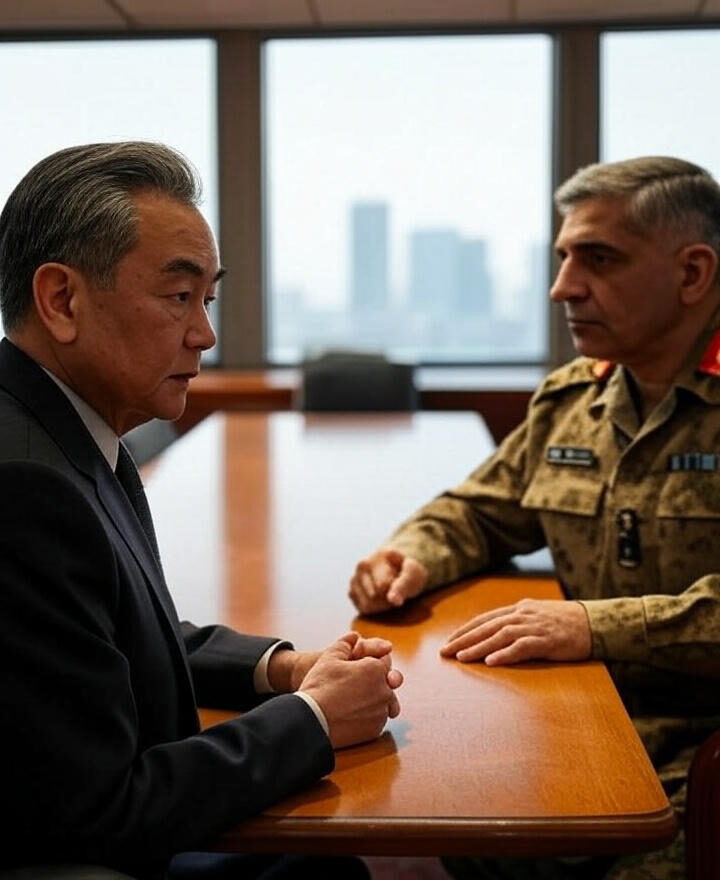
On August 22, 2025, Chinese Foreign Minister Wang Yi met with Pakistan’s Chief of Army Staff, Field Marshal Syed Asim Munir, in Islamabad to discuss pressing regional security and counter terrorism challenges. This high-level dialogue underscored the steadfast nature of their “all weather strategic cooperation” and highlighted mutual commitments to regional peace and stability.(The Express Tribune, Dawn)
Reinforcing the Ironclad Alliance
Wang Yi reaffirmed China’s unwavering support for Pakistan’s sovereignty and development. He praised the Pakistani military for playing a central role in bilateral relations and for protecting Chinese nationals and projects, particularly along the China Pakistan Economic Corridor (CPEC). In response, COAS Munir expressed gratitude for China’s consistent backing and pledged to deepen counter-terrorism cooperation and security coordination.(Chinese Foreign Ministry, Dawn, Pakistan Observer, Reuters)
This exchange reflects the long standing “ironclad” friendship and shared strategic vision that continues to define China Pakistan relations.(Reuters, The Express Tribune)
Focused on Regional Security and Counter Terrorism
At the heart of their dialogue was a commitment to intensify collaboration in combating terrorism, especially transnational and hybrid threats. They agreed on the necessity of strengthening law enforcement dialogue and security cooperation, aligning with broader efforts to stabilize the region.(Dawn, Reuters, Pakistan Observer, Business Recorder)
Pakistan’s counter terror operations, such as the ongoing Operation Azm-e-Istehkam, reinforce its dedication to dismantling extremist threats a strategic alignment with China’s security concerns in adjacent regions like Xinjiang.(Wikipedia)
Doubling Down on CPEC and Connectivity
Parallel to security issues, both sides recommitted to advancing the transformative CPEC 2.0 agenda. Discussions underlined plans for new infrastructure investments in industry, agriculture, mining, transportation, and energy seeking to turn CPEC into a “growth, green, livelihood, and open corridor.”(Pakistan Observer, Reuters)
These developments aim to boost Pakistan’s socio economic resilience and regional connectivity, reinforcing the strategic integrality of bilateral cooperation(Globedge).
Together at Global and Regional Forums
Both leaders committed to enhancing China Pakistan coordination at regional and international platforms anticipating alignment at multilateral forums like the Shanghai Cooperation Organisation (SCO).(Business Recorder, Reuters, Wikipedia)
Their cooperation resonates with broader SCO mechanisms such as the Regional Anti Terrorist Structure (RATS), reinforcing multilateral counter terrorism collaboration across Eurasia.(Wikipedia)
In addition, political messaging emphasized opposing unilateralism, supporting multilateral trade, and stabilizing regional diplomacy especially ahead of summit-level engagements among China, Pakistan, India, and others.(Reuters)
Context and Broader Implications
This meeting in Islamabad follows COAS Munir’s earlier visit to Beijing in July 2025, where he met with Wang Yi and other senior Chinese officials, marking a continuation of deepening military and strategic ties.(The Economic Times, Anadolu Ajansı, Reuters)
China’s approach underscores Pakistan as a diplomatic priority, with Beijing reaffirming its support in areas from development projects to counter-terrorism in response to security threats to Chinese workers in Pakistan.(Reuters)
For Pakistan, the meeting represents an opportunity to fortify its strategic ties, secure vital development infrastructure, and ensure robust defense cooperation during a volatile regional trajectory.
Conclusion: A Strategic Blueprint for Stability
Overall, the Wang Yi Munir meeting cemented the enduring and multifaceted China Pakistan strategic partnership. Key outcomes include:
- Renewed emphasis on counter terrorism and regional security coordination.
- Continuation and expansion of CPEC projects and economic connectivity.
- Strategic collaboration at multilateral forums aimed at regional stability.
In an increasingly complex geopolitical environment, the dialogue symbolizes a strong alliance aligned on security, development, and mutual sovereignty. Both sides appear poised to harness this momentum to reinforce regional peace and progress.