
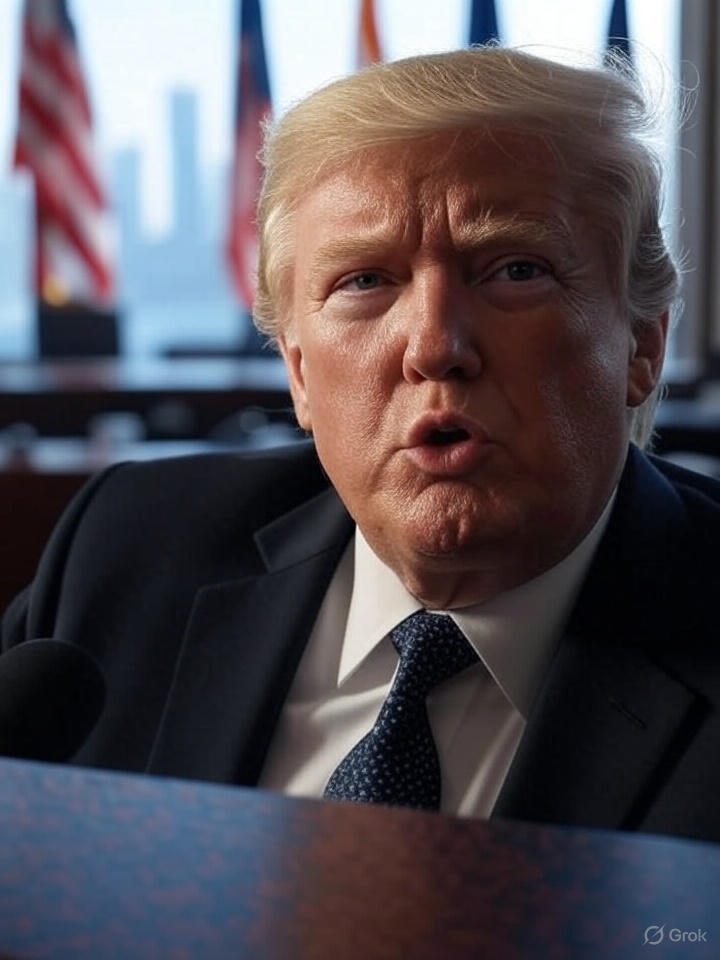
On July 31, 2025, U.S. President Donald Trump sharply criticized both India and Russia, branding their “Dead Economies” in the context of escalating trade tensions. This came after he announced a 25% tariff on Indian imports plus unspecified penalties citing India’s ongoing purchases of Russian energy and military equipment as grounds for punitive action (The Guardian).
In a Truth Social post, Trump declared:
“I don’t care what India does with Russia. They can take their dead economies down together, for all I care.”
“We have done very little business with India their tariffs are too high Likewise, Russia and the U.S. do almost no business together.”(Globedge).
Background & Escalation
- The tariffs are part of Trump’s broader global strategy, demanding trade agreements by August 1, with exceptions made for countries like the EU, Japan, Vietnam, the UK, and China (The Guardian).
- Trump emphasized India’s strategic alignment with Russia, noting its heavy imports of crude oil (around 38, 40% of Russia’s exports) and reliance on Russian defense hardware as triggers for the tariff action (Financial Times).
- He followed up by personally targeting former Russian President Dmitry Medvedev, warning him not to provoke conflict with his rhetoric. Medvedev had earlier accused Trump of risking war with the U.S. via ultimatums to Russia (www.ndtv.com).
Economic & Diplomatic Ramifications
- Despite Trump’s claims of minimal trade, the U.S. India bilateral goods turnover reached approximately $129 billion in 2024, with a trade deficit of nearly $45.7 billion making India a major U.S. partner (Financial Times).
- India’s average tariff rate (~12%) starkly contrasts with the U.S.’s lower rate (~2.2%), prompting Trump to label India a “trade abuser” and “tariff king” (en.wikipedia.org).
- Estimates from both U.S. and Indian analysts suggest the 25% tariff with additional penalties could severely disrupt India’s export competitiveness, particularly in pharmaceuticals, auto parts, mineral fuels, and machinery (impacting up to 87% of export volumes) (en.wikipedia.org).
Strategic & Political Messaging
- The move signals a significant shift: using trade policy as a tool to influence geopolitical alignment, particularly on India’s Russia ties.
- Trump underscored that India’s relations with Moscow especially in energy and defense conflict with U.S. objectives to pressure Russia over its war in Ukraine (Reuters, en.wikipedia.org).
- His message also included jabs at Pakistan, revealing a new U.S. Pakistan oil partnership that could potentially undercut India’s energy imports in the future (The Guardian).
Reactions & Risks
- India’s response: The central government has acknowledged the tariff announcement, promising to protect national interests and continue trade negotiations aimed at a fair bilateral deal especially safeguarding agriculture, MSMEs, and domestic welfare sectors.
- Analysts warn Trump’s rhetoric may backfire: India’s growing strategic autonomy and economic resilience suggest limited U.S. leverage, while penalties may boost India’s resolve to diversify trade, including stronger ties with Russia, China, and other emerging partners.
- Misreading market ties: Trump has repeatedly mischaracterized the U.S. India trade relationship. Despite modest U.S. Russia trade volumes, Delhi along with Beijing has become a critical buyer of discounted Russian oil post Ukraine conflict, complicating Washington’s push for unified sanctions (Reuters, en.wikipedia.org).
Summary Table
| Key Element | Details |
|---|---|
| Trump’s Label | India and Russia are “dead economies” |
| Tariff Action | 25% tariff on Indian imports + additional unspecified penalty starting Aug 1 |
| Foreign Policy Nexus | Triggered by India’s energy and defense trade ties with Russia |
| Trade Facts | U.S. India goods trade ≈ $129 b in 2024; U.S. trade deficit ≈ $45.7 b |
| Indian Reaction | Reviewing the move; pledges to protect national interest via trade deals |
| Risks & Impacts | Potential disruption of Indian exports; diplomatic blowback; market turmoil |
Final Analysis
Trump’s headline grabbing labeling of India and Russia as “dead economies” reflects a broader strategy of weaponizing trade policy to achieve geopolitical leverage. By linking India’s economic behavior to its ties with Moscow and threatening steep tariffs Trump seeks to strong arm alignment with U.S. interests.
But this aggressive posture carries risks. India’s leadership has repeatedly stressed its commitment to sovereign decision making, balancing international pressures with domestic priorities. The potential fallout includes economic losses on both sides, heightened geopolitical misalignment, and long‑term damage to U.S. credibility especially if markets begin to see U.S. policies as unpredictable. Whether this maneuver forces India to recalibrate its strategic stance or merely hardens its resolve to diversify partnerships remains uncertain as the August 1 deadline looms.